
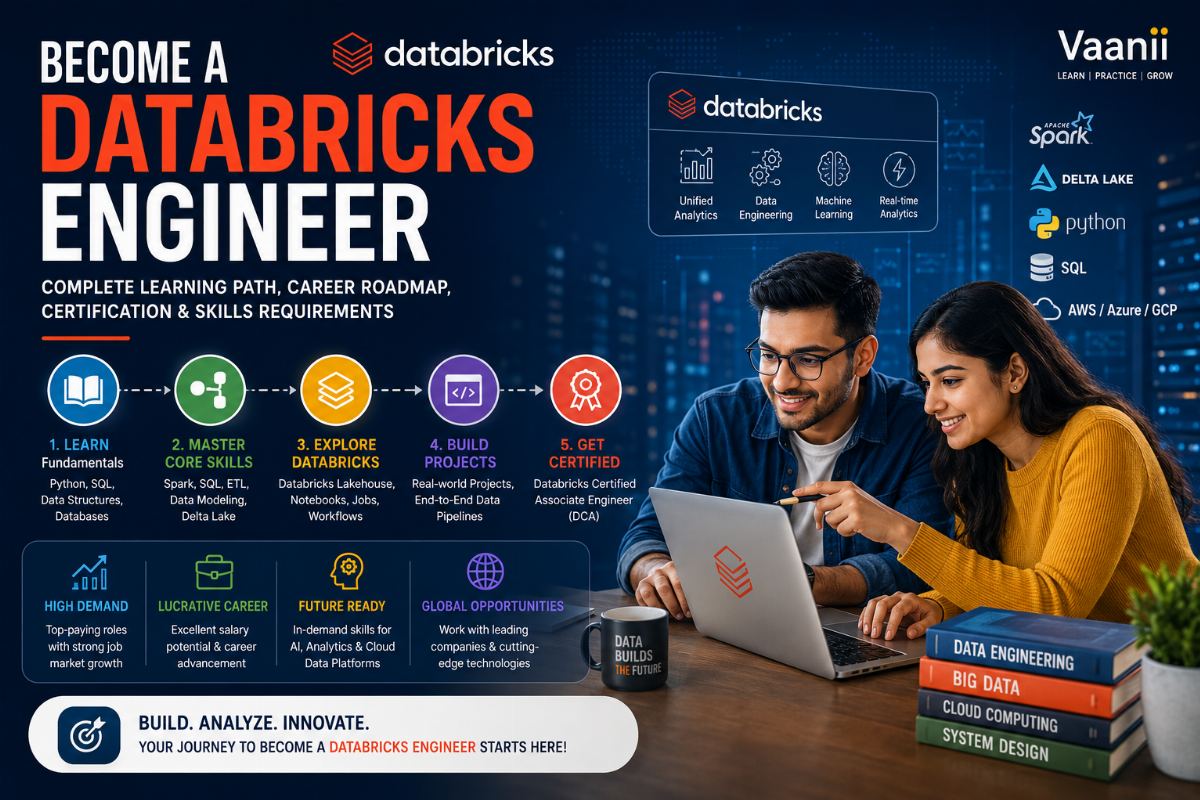
As organizations increasingly adopt modern data platforms, cloud analytics, and AI-driven solutions, Databricks Engineers have become some of the most sought-after professionals in the data ecosystem. Databricks combines Data Engineering, Data Science, Analytics, and Machine Learning into a unified platform, making it a critical technology for modern enterprises.
If you're wondering how to become a Databricks Data Engineer, this guide covers everything you need to know—from skills and certifications to salary expectations and career opportunities.
What Does a Databricks Data Engineer Do?
A Databricks Engineer designs, develops, and manages scalable data pipelines, analytics solutions, and machine learning workflows using the Databricks platform. They help organizations process large volumes of data efficiently while supporting business intelligence, advanced analytics, and AI initiatives.
Typical Responsibilities:
- Building scalable data pipelines
- Developing ETL and ELT workflows
- Working with Apache Spark and PySpark
- Designing Lakehouse architectures
- Managing Databricks workspaces
- Optimizing data processing performance
- Supporting Machine Learning initiatives
- Collaborating with Data Scientists and Cloud Engineers
Why Choose a Career as a Databricks Engineer?
Databricks has rapidly become one of the leading platforms for modern data and AI workloads, creating strong demand for professionals with Databricks expertise.
Benefits of Becoming a Databricks Engineer:
- High demand in cloud and data-driven organizations
- Attractive salary packages
- Opportunities to work on AI and Machine Learning projects
- Exposure to modern data architectures
- Global career opportunities
- Strong career growth potential
- Future-proof technology skillset
[Know More: How to Become a Data Engineer? Complete Learning Path, Career Roadmap & Certifications Needed]
Average Salary of Databricks Engineer in USA
Databricks data engineers command competitive salaries due to the growing adoption of cloud-based data platforms.
Estimated Annual Salaries:
|
Experience Level |
Average Salary |
|
Entry-Level |
$95,000 - $125,000 |
|
Mid-Level |
$125,000 - $170,000 |
|
Senior-Level |
$170,000 - $250,000+ |
Compensation varies depending on cloud expertise, certifications, location, and industry experience.
Skills Required to Become Databricks Engineer
To become a successful Databricks Engineer, you need expertise in data engineering, cloud computing, and Big Data technologies.
Technical Skills:
- SQL
- Python
- PySpark
- Apache Spark
- Databricks Platform
- Data Engineering
- Data Warehousing
- ETL & ELT Processes
- Delta Lake
- Lakehouse Architecture
- Azure Databricks
- AWS Databricks
- Cloud Computing
- GitHub
- Data Modeling
Soft Skills:
- Problem-solving
- Analytical thinking
- Communication
- Team collaboration
- Attention to detail
- Business understanding
Tools & Technologies for Databricks Engineering
Databricks Engineers work with a variety of cloud and data technologies. Master the essential tools used in Databricks Engineering, including SQL, Python, PySpark, Apache Spark, Delta Lake, Azure, AWS, GitHub, ETL tools, and cloud data platforms.
Programming Languages
- Python
- SQL
- Scala (optional)
Big Data Technologies
- Apache Spark
- PySpark
- Delta Lake
Databricks Ecosystem
- Azure Databricks
- Databricks SQL
- Databricks Workflows
- Unity Catalog
- MLflow
Cloud Platforms
- Microsoft Azure
- AWS
- Google Cloud Platform
Databases & Warehouses
- Snowflake
- SQL Server
- PostgreSQL
- Azure Synapse Analytics
Development Tools
- GitHub
- Git
- Jupyter Notebooks
Step-by-Step Databricks Engineering Career Roadmap
Follow a step-by-step Databricks data engineer roadmap to master SQL, Python, PySpark, Spark, cloud platforms, and real-world projects for a successful data career.
Step 1: Learn SQL Fundamentals
Master database concepts, joins, window functions, and query optimization.
Step 2: Learn Python Programming
Develop skills in scripting, automation, and data processing.
Step 3: Understand Data Engineering Concepts
Learn data pipelines, ETL processes, and data warehousing fundamentals.
Step 4: Master Apache Spark
Study distributed computing and large-scale data processing.
Step 5: Learn PySpark
Build expertise in Spark transformations, actions, and optimization techniques.
Step 6: Learn Databricks Platform
Understand notebooks, clusters, jobs, workflows, and workspace management.
Step 7: Explore Delta Lake & Lakehouse Architecture
Learn modern approaches to data storage, governance, and analytics.
Step 8: Gain Cloud Experience
Work with Azure Databricks, AWS Databricks, and cloud storage services.
Step 9: Build Real-World Projects
Create end-to-end data engineering and analytics solutions.
Step 10: Prepare for Interviews & Certifications
Practice Databricks, Spark, SQL, and cloud-related interview questions.
Certifications to Become Databricks Engineer
Professional certifications help validate your Databricks expertise and improve career opportunities.
Recommended Databricks Certifications:
- Databricks Certified Data Engineer Associate
- Databricks Certified Data Engineer Professional
- Databricks Certified Machine Learning Associate
- Microsoft Azure Data Engineer Associate
- Microsoft Azure Fundamentals
- AWS Certified Data Engineer
- Snowflake SnowPro Certification
[Also Know: How to Become a Data Scientist: Complete Learning Path, Career Roadmap, Future Scope & Salary]
Databricks Engineer Learning Path for Beginner
Start your Databricks journey with a structured learning path covering SQL, Python, PySpark, Apache Spark, Delta Lake, cloud platforms, and hands-on projects to build job-ready skills.
Phase 1: Foundations
- SQL Fundamentals
- Python Programming
- GitHub Essentials
Phase 2: Data Engineering Basics
- Data Warehousing
- ETL Concepts
- Data Modeling
Phase 3: Big Data Technologies
- Apache Spark
- PySpark
- Distributed Computing
Phase 4: Databricks Specialization
- Databricks Fundamentals
- Delta Lake
- Lakehouse Architecture
Phase 5: Cloud Data Platforms
- Microsoft Azure
- Azure Databricks
- AWS Data Services
Phase 6: Portfolio Development
- Data Pipeline Projects
- Databricks Projects
- GitHub Portfolio
Databricks Engineer Interview Questions for Beginners
Prepare for Databricks Engineer interviews with beginner-friendly questions on SQL, Python, PySpark, Apache Spark, Delta Lake, ETL, cloud concepts, and real-world data engineering scenarios.
Beginner Level
- What is Databricks?
- What is Apache Spark?
- What is PySpark?
- What is ETL?
- What is Delta Lake?
Intermediate Level
- Explain Lakehouse Architecture.
- What are Spark transformations and actions?
- What is partitioning in Spark?
- Explain Databricks clusters.
- What is Databricks SQL?
Advanced Level
- How would you optimize a Spark job?
- What is the difference between Data Lake and Lakehouse?
- Explain Delta Tables and Delta Logs.
- How does Unity Catalog work?
- Describe an end-to-end Databricks project you have implemented.
Databricks Engineer Job Opportunities & Future Scope
Databricks continues to be one of the fastest-growing technologies in the Data Engineering and AI ecosystem.
Popular Job Titles:
- Databricks Engineer
- Data Engineer
- Cloud Data Engineer
- Big Data Engineer
- Spark Developer
- Analytics Engineer
- Data Platform Engineer
- Machine Learning Platform Engineer
Industries Hiring Databricks Engineers:
- Technology
- Financial Services
- Healthcare
- Retail & E-commerce
- Telecommunications
- Manufacturing
- Consulting
As enterprises modernize their data infrastructure and AI capabilities, demand for Databricks professionals is expected to grow significantly.
Vaanii Courses for Career in Databricks Engineer
Build your Databricks career with these learning paths or courses from Vaanii:
Foundation Courses
- SQL Fundamentals
- Python Programming
- GitHub Essentials
Data Engineering Courses
- PySpark Training
- Databricks Fundamentals
- ETL Tools Training
- Data Warehousing Concepts
Cloud Data Engineering
- Microsoft Azure Fundamentals
- Azure Data Factory
- Cloud Data Engineering Essentials
These courses help learners develop practical, job-ready skills required for Databricks-focused careers.
Frequently Asked Questions
Is Databricks a good career in 2026?
Yes. Databricks is one of the fastest-growing data platforms and is widely adopted by enterprises for data engineering, analytics, and AI workloads.
Do I need PySpark to become a Databricks Engineer?
Absolutely. PySpark is one of the most important skills for Databricks Engineers because Spark is the core processing engine behind the platform.
Is Databricks only for Data Engineers?
No. Databricks is used by Data Engineers, Data Scientists, Analytics Engineers, and Machine Learning Engineers.
How long does it take to learn Databricks?
With consistent learning and hands-on practice, most professionals can gain foundational Databricks skills within 3-6 months.
Which cloud platform should I learn with Databricks?
Microsoft Azure and AWS are the most commonly used cloud platforms for Databricks deployments.
Is Databricks certification worth it?
Yes. Databricks certifications help validate your expertise and can improve job opportunities, especially for Data Engineering and Cloud Data roles.
Conclusion
Databricks has become a cornerstone technology for modern data engineering, analytics, and AI initiatives. By mastering SQL, Python, PySpark, Apache Spark, Delta Lake, Lakehouse Architecture, and Cloud Platforms, you can position yourself for a highly rewarding and future-ready career as a Databricks Engineer.
Discussion
Be the first to share your thoughts.